2 minute Read.19 January 2026 • Industry Insight
Why Cameras Didn’t Make Industrial Operations Safer
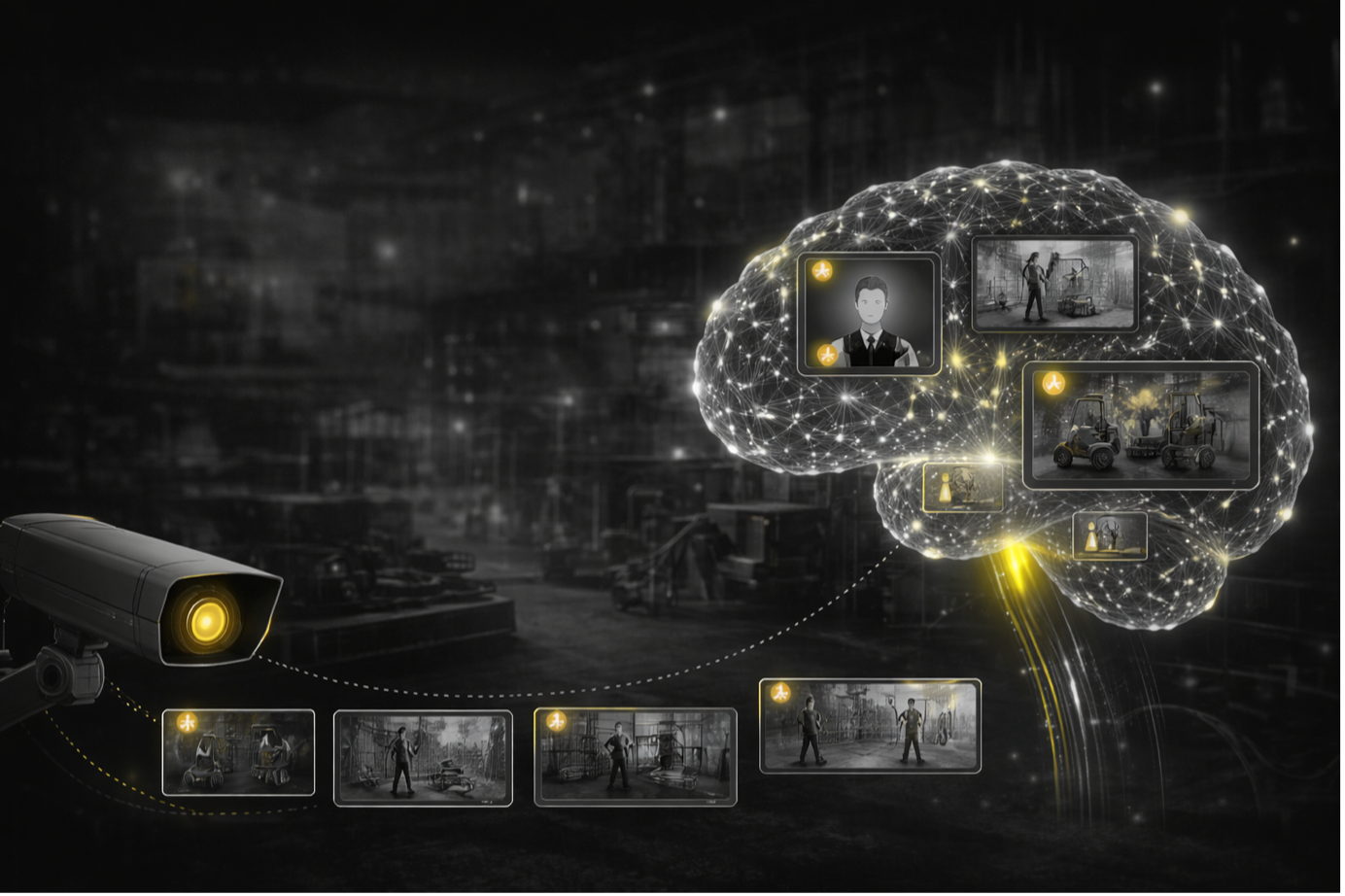
Image: Visualizing the gap between data and understanding in heavy industry
For the last decade, industrial companies have invested heavily in cameras. Mines, ports, plants, warehouses. Everywhere you go, there is more video than ever before. More angles. More coverage. Higher resolution. Longer retention.
And yet, incidents still happen.
When something goes wrong, the process looks familiar. Someone pulls footage. The video is reviewed. A report is written. Lessons are learned, at least on paper. Then operations resume, often with the quiet hope that next time will be different.
The uncomfortable truth is that cameras did exactly what we asked of them. They recorded. What they never did was make operations safer.
I have spent enough time around heavy industry to know that this is not a technology problem in the simple sense. It is a systems problem. Cameras capture reality, but safety depends on understanding it while it is unfolding, not after it is frozen into evidence.
In mining, this gap becomes painfully obvious. A person using stairs without three points of contact. A haul truck moving just a bit faster than conditions allow. A worker stepping briefly into a vehicle envelope. Each of these moments looks harmless on its own. Most days, nothing happens. Until one day, it does.
What cameras give you is visibility. What safety actually requires is context.
Most safety programs today rely on a mix of training, procedures, signage, and human supervision. Video gets added on top as a passive witness. Someone might review footage at the end of a shift, or worse, after an incident. By then, the moment has already passed. The risk has already materialized.
This is why adding more cameras never changed the outcome. It increased data, not understanding. Over the last year, as I have spent more time in mines and industrial sites, a pattern has become impossible to ignore. Risk does not live in isolated frames. It lives in sequences. In relationships. In how people, machines, and environments interact over time.
A single video clip can tell you what happened. It cannot tell you whether this behavior is rare or routine. It cannot tell you whether conditions are deteriorating. It cannot tell you whether today looks different from yesterday, or why.
That is the blind spot.
Digital observability became the infrastructure that made modern software reliable. We are now building that same infrastructure for the physical world. We can tell, in real time, when a server is misbehaving, when latency is creeping up, when a failure is about to cascade. Physical operations, which are far more dangerous and far more expensive to interrupt, are still largely opaque.
This is where the idea of physical observability starts to matter.
Physical observability is not about watching more screens. It is about understanding what is happening in the physical world as it happens. It means interpreting video not as footage, but as signals. It means recognizing patterns across time, across shifts, across sites. It means linking what the camera sees to the context that explains why it matters.
This is the problem Misti AI is being built to solve. We are building the infrastructure that turns cameras into operational memory. Not another dashboard, not another stream of alerts, but a system that understands what is happening, remembers what has happened before, and connects those moments into something teams can act on. Safety is the entry point, because it is where the cost of not understanding is highest. But the foundation is broader: a shared memory of physical operations that machines and humans can trust.
A person missing a handrail once is noise. The same behavior appearing across multiple shifts is signal. A near miss that repeats in slightly different forms is not bad luck. It is a system telling you something is wrong.
When you start to look at operations this way, safety stops being a compliance function and becomes an intelligence layer. One that can surface risk early, explain it clearly, and provide evidence that people can trust.
This shift is happening now for a simple reason. The building blocks finally exist. Cameras are everywhere. Edge hardware is powerful enough to process video in real time. Models can understand posture, movement, proximity, and intent with accuracy that was not practical a few years ago.
What has been missing is not detection, but integration. The ability to connect perception with context. To move from alerts to understanding. From isolated events to operational insight.
I believe safety is the natural entry point for this transformation, especially in heavy industry. Not because safety is a checkbox, but because it is where the cost of not understanding is measured in human lives. When you build systems that can reason about risk in real time, you gain a vantage point over the entire operation.
That is the foundation for something bigger. More resilient operations. More trusted autonomy. A physical world that does not just get recorded, but understood.
Cameras did their job. Now it is time for the systems around them to do theirs.
Sama-Carlos Samamé
CEO & Co-founder